
WELCOME | WHAT IS ZEN
Zazen Instruction
What you need to know to take your seat.
Just sitting
Zazen, or sitting meditation, is the foundation of Zen practice. It is not a technique for relaxation or a method for achieving a particular state of mind. It is the practice of being fully present, exactly where you are. At Appamada, sitting periods are thirty minutes each. The wooden clappers signal the countdown to zazen; three bells mark the start of sitting, and bells again mark the end of each period. These guidelines are intended to support your practice. They are not rigid rules — Zen training requires flexibility, not rigidity. But common courtesy and consistent form help create the conditions for awareness, stillness, and calm.
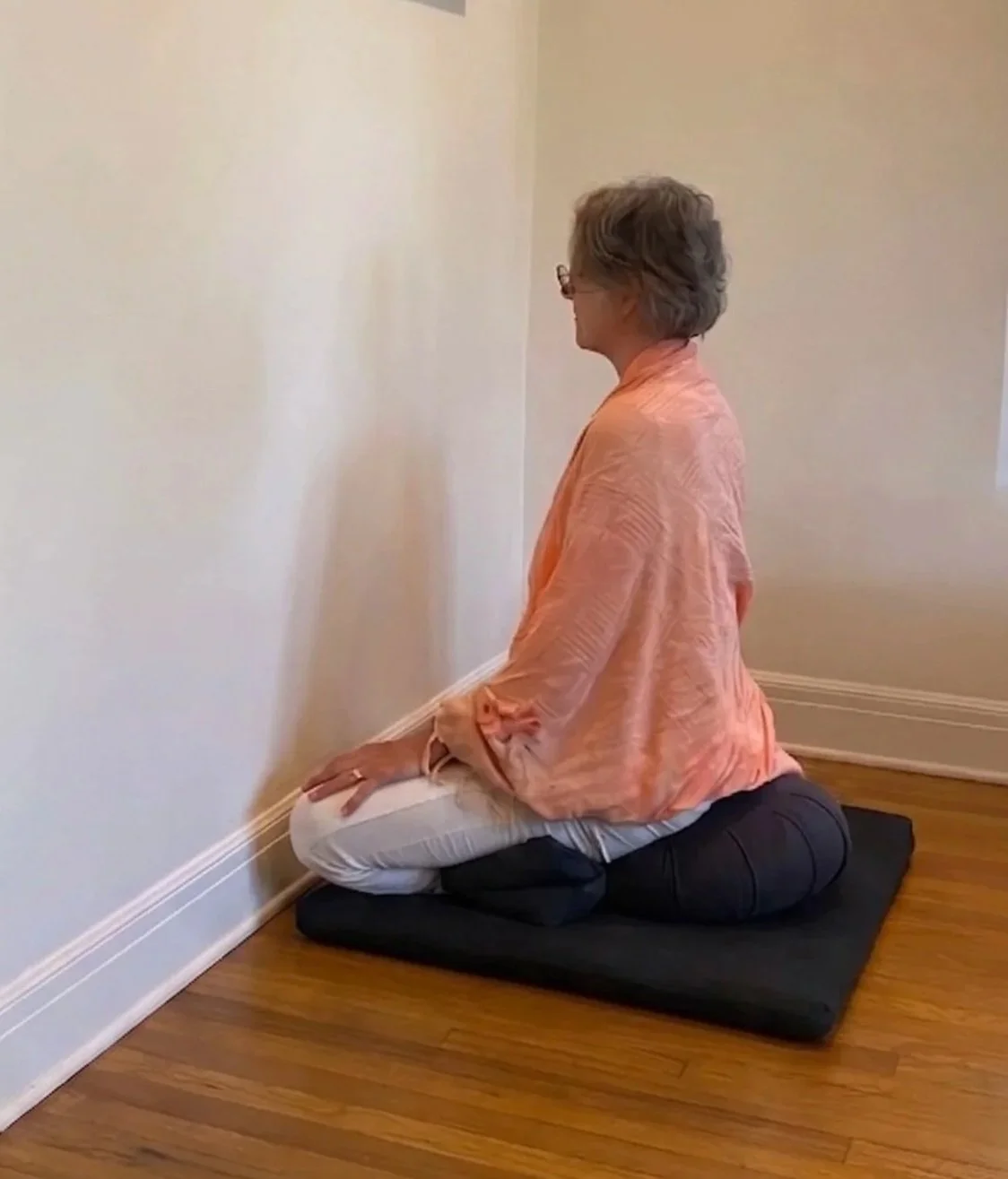
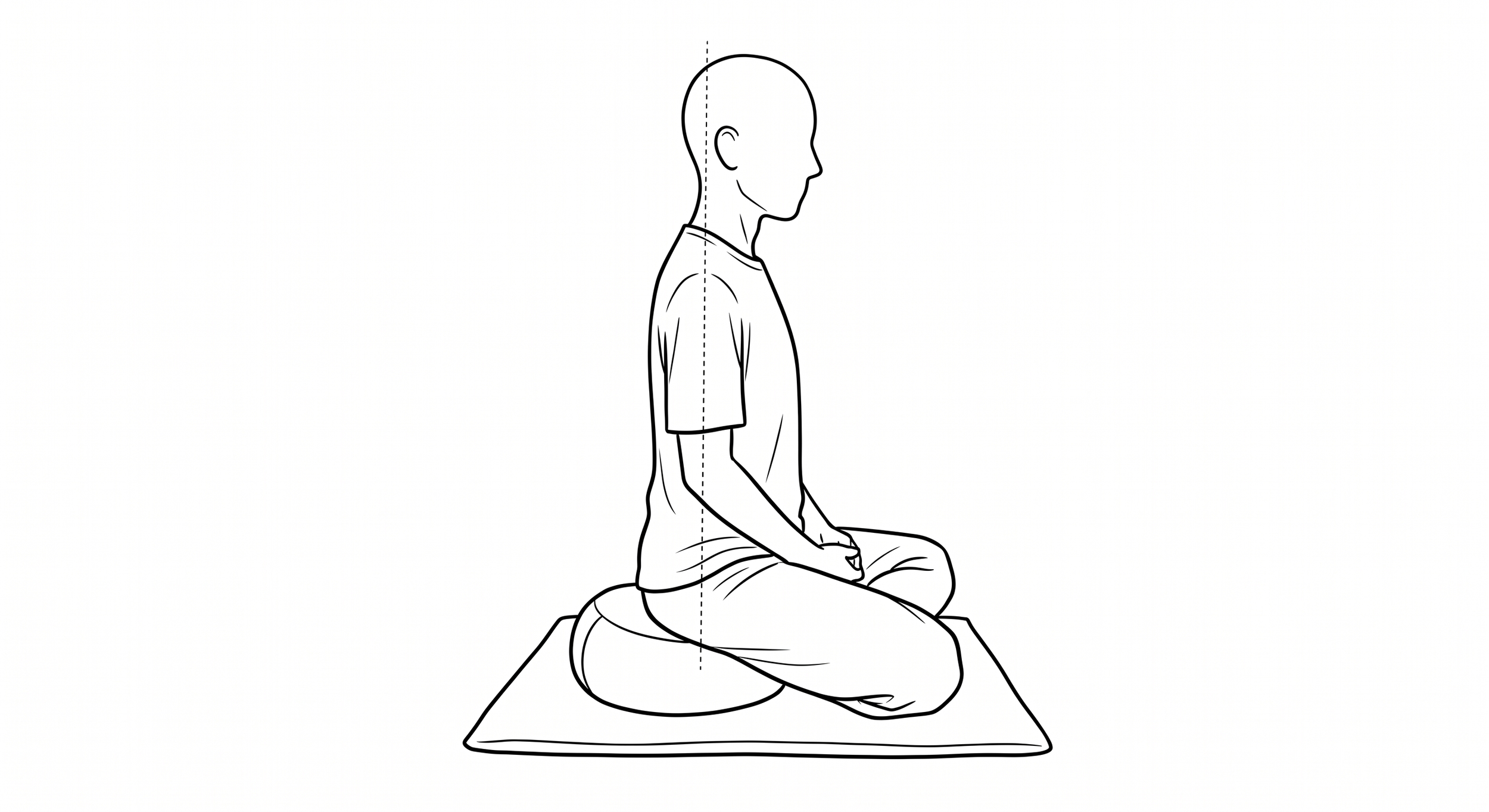
Taking your seat
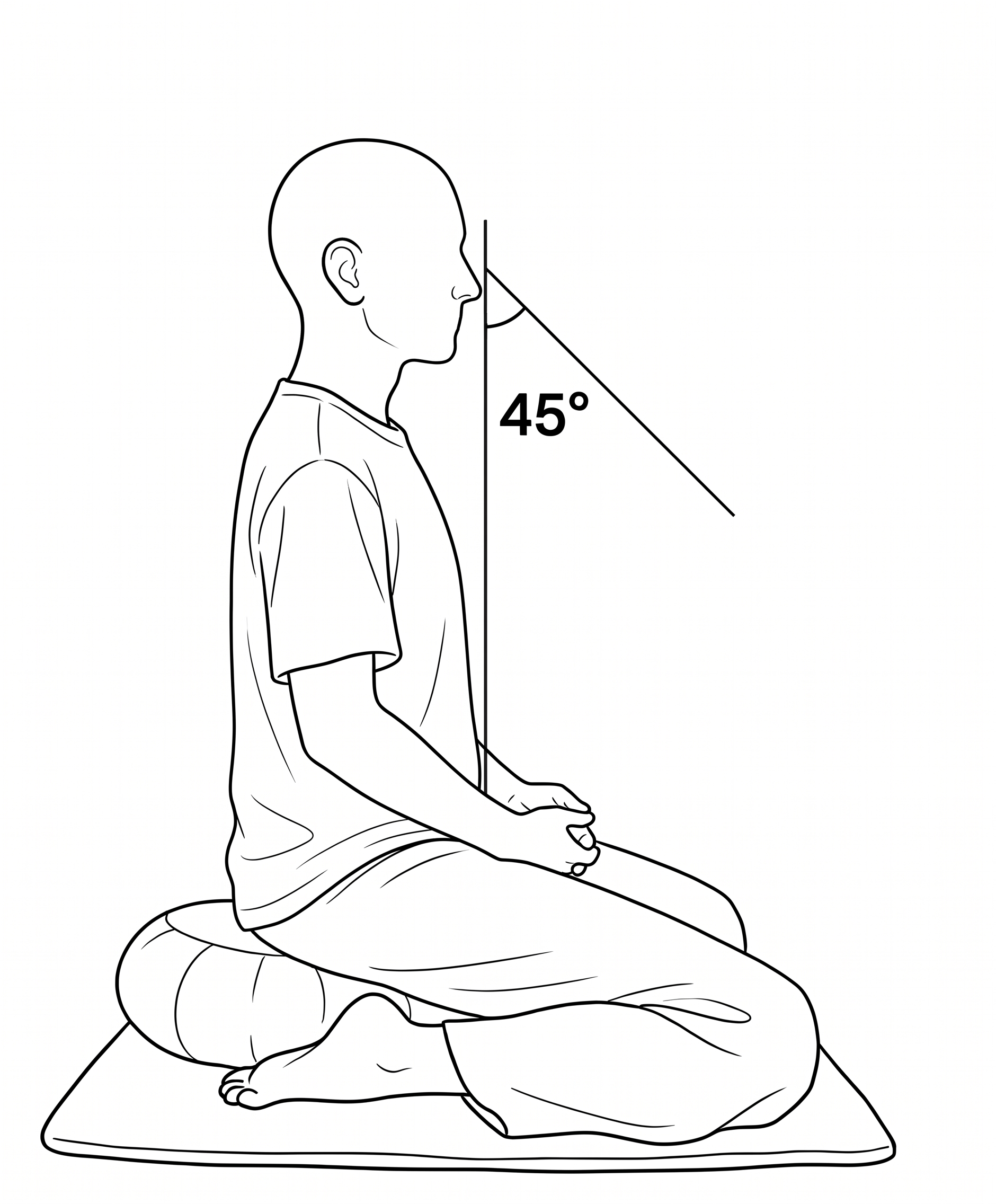
Sit on the front third of a round cushion (zafu) placed on a flat mat (zabuton). Your hips should be higher than your knees. Straighten your spine from the base — not rigid, but upright. Tuck your chin slightly. Your ears should be over your shoulders, your nose over your navel.
Relax your shoulders. Let your belly be soft. Settle into gravity. Please be seated at least five minutes before the start of the first sitting period.
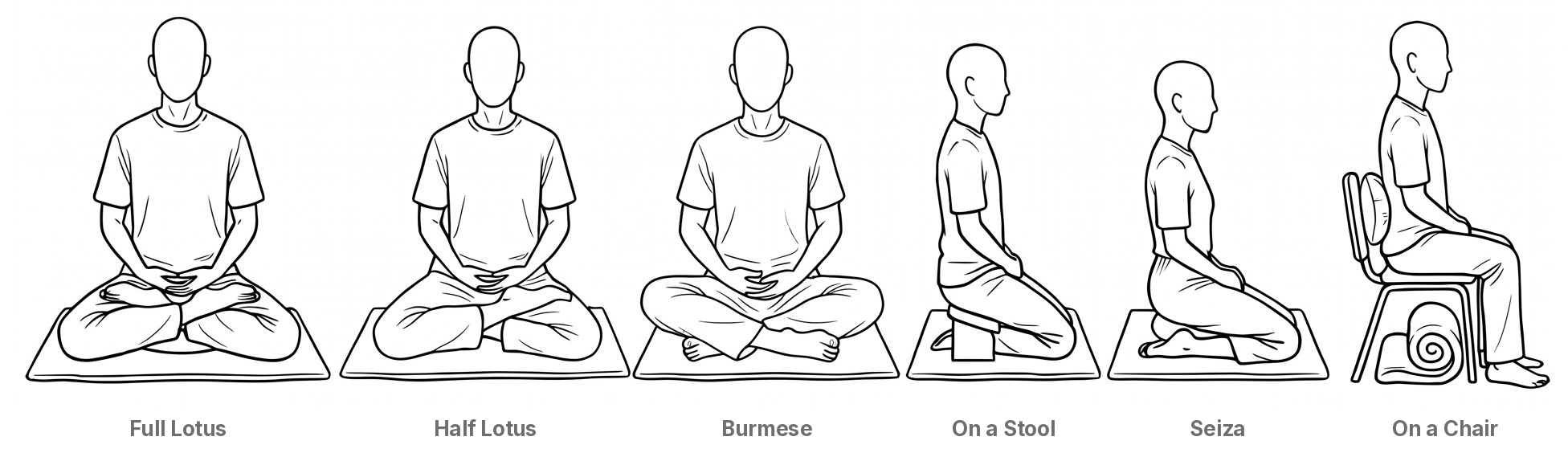
Leg positions
Any of these positions is fine. Use the one your body can sustain comfortably for thirty minutes. There is no hierarchy — the practice is the same regardless of how you sit.
Stillness
In whatever posture you choose, remain still. Breathe in an ordinary manner. Don't look around or talk. You will notice urges to move — to scratch, to adjust, to fidget. These are usually ways of moving away from the energies in your body. Instead of moving, stay with them, observe them, and bring your focus back to the breathing. Learn to notice how these urges fall away, only to be replaced by others. Let stillness find you.
The hands
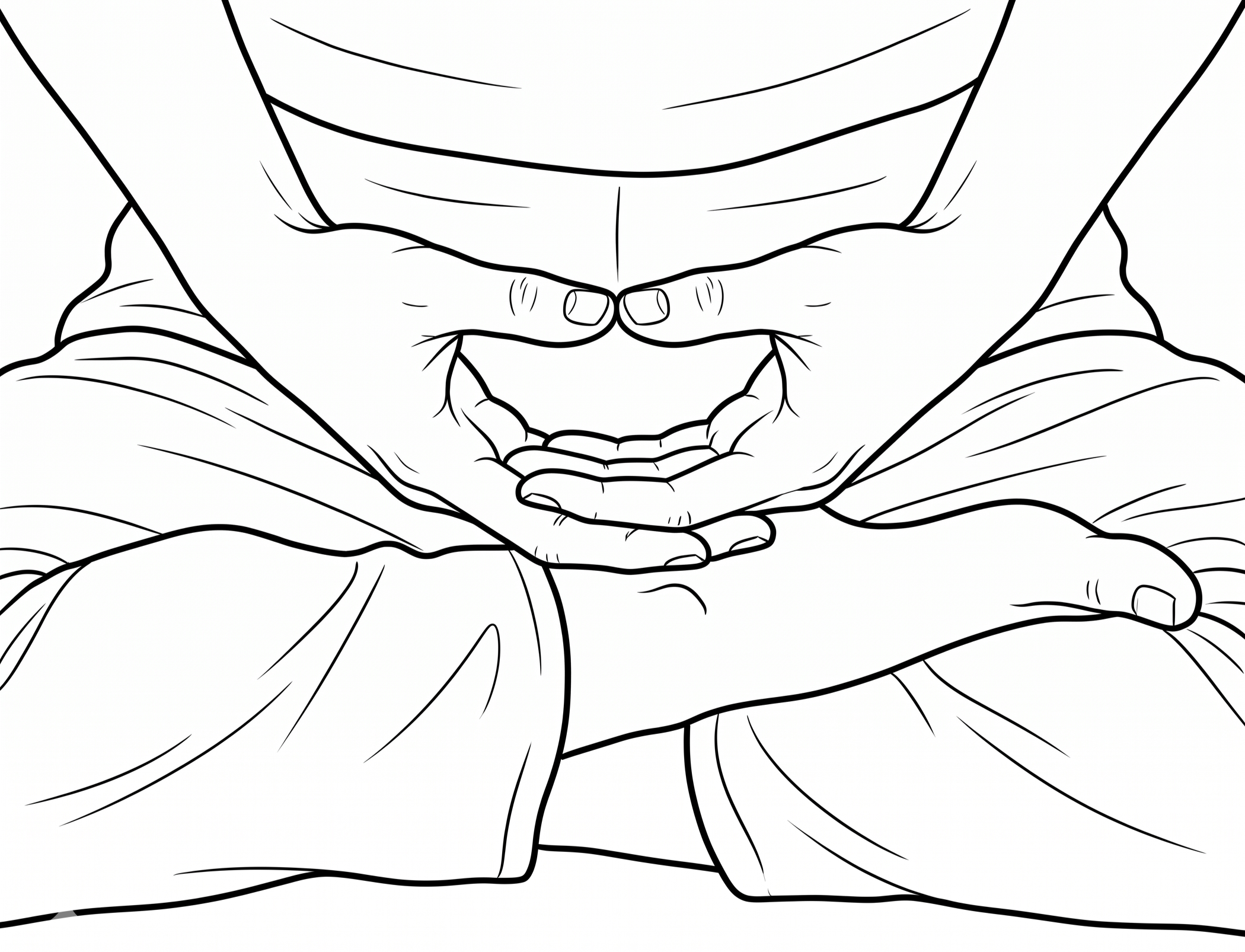
Place your right hand palm-up on your lap, and your left hand palm-up on top of it. Let the tips of your thumbs touch lightly, forming an oval. This is called the cosmic mudra. Hold your hands gently against your lower belly.
The mudra is a kind of mirror: when your attention drifts, your thumbs will press together or fall apart. Let them be a soft signal to return.
The gaze
Keep your eyes open, with a soft downward gaze resting on the floor or wall about three feet ahead of you. Don't focus on anything. Don't look about — this is distracting for yourself and others. Don't close your eyes — that tends to invite drowsiness or fantasy. We practice with our eyes open because we are practicing being awake.
The breath
Breathe naturally through your nose. Don't try to control your breath. Let it settle on its own. Allow the breath to fill your lower belly — let it rise and fall naturally. Follow the breath. Some people find it helpful to silently count each exhale, from one to ten, then start again. When you realize you've lost count, just come back to one.
The mind
Thoughts will come. This is not a problem — it's what minds do. The practice is simply to notice that you've been thinking and return. Not with force, not with frustration, not with judgment. Just come back. This returning — over and over — is the practice itself. Don't worry about whether your practice is working. When you sit, just sit. That's enough.
Other basic forms
Walking Meditation (Kinhin)
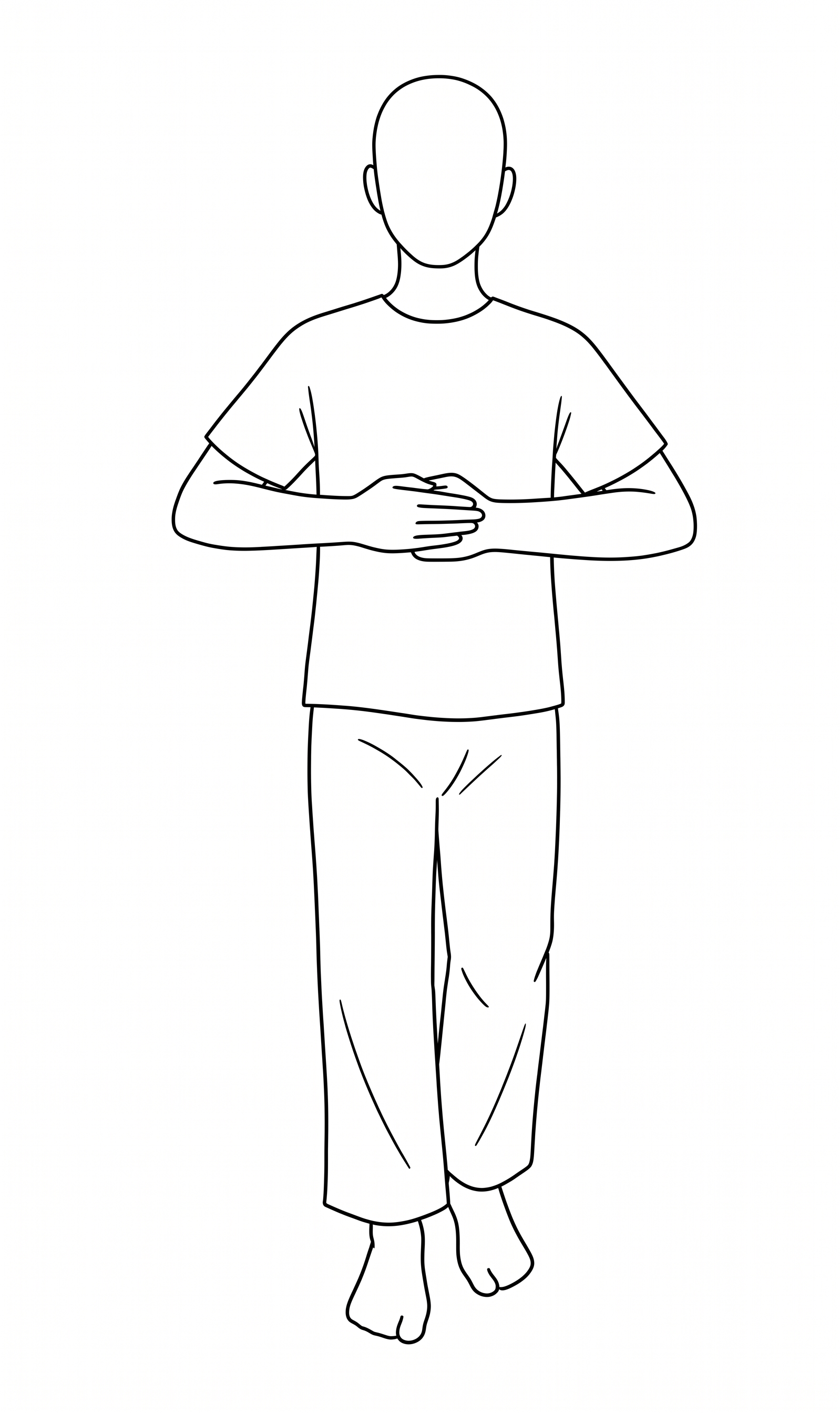
Between sitting periods, we practice walking meditation — or kinhin — as a continuation of zazen. At the bell, stand and place your palms together. At the first clapper, bow, turn to the left, and form your left hand into a fist with your thumb tucked inside. Place your hands in shashu with right hand over the fist and hold both hands at chest level. Space yourself evenly in the room.
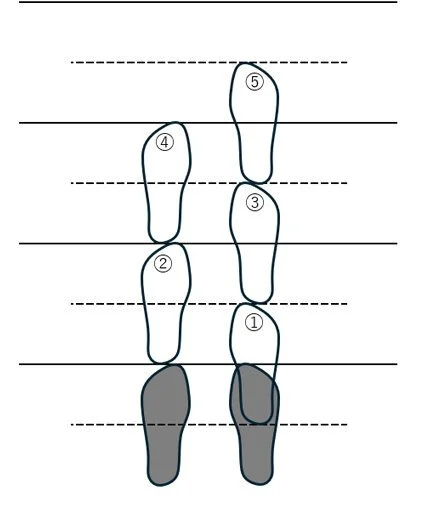
At the second clapper, begin slow kinhin — one short step per breath (see diagram for step length), synchronized with your exhale. Walk with the same quality of attention you bring to sitting. After a few minutes, the clappers will sound again, signaling fast kinhin. Walk with energy and a longer gait. After the final clappers, place your hands in gassho — palms together — and move briskly to your seat, bow, and sit down.
You may use the restroom during kinhin. Please wait until people have begun slow kinhin to leave unless it is an emergency.
Bowing (Gassho)
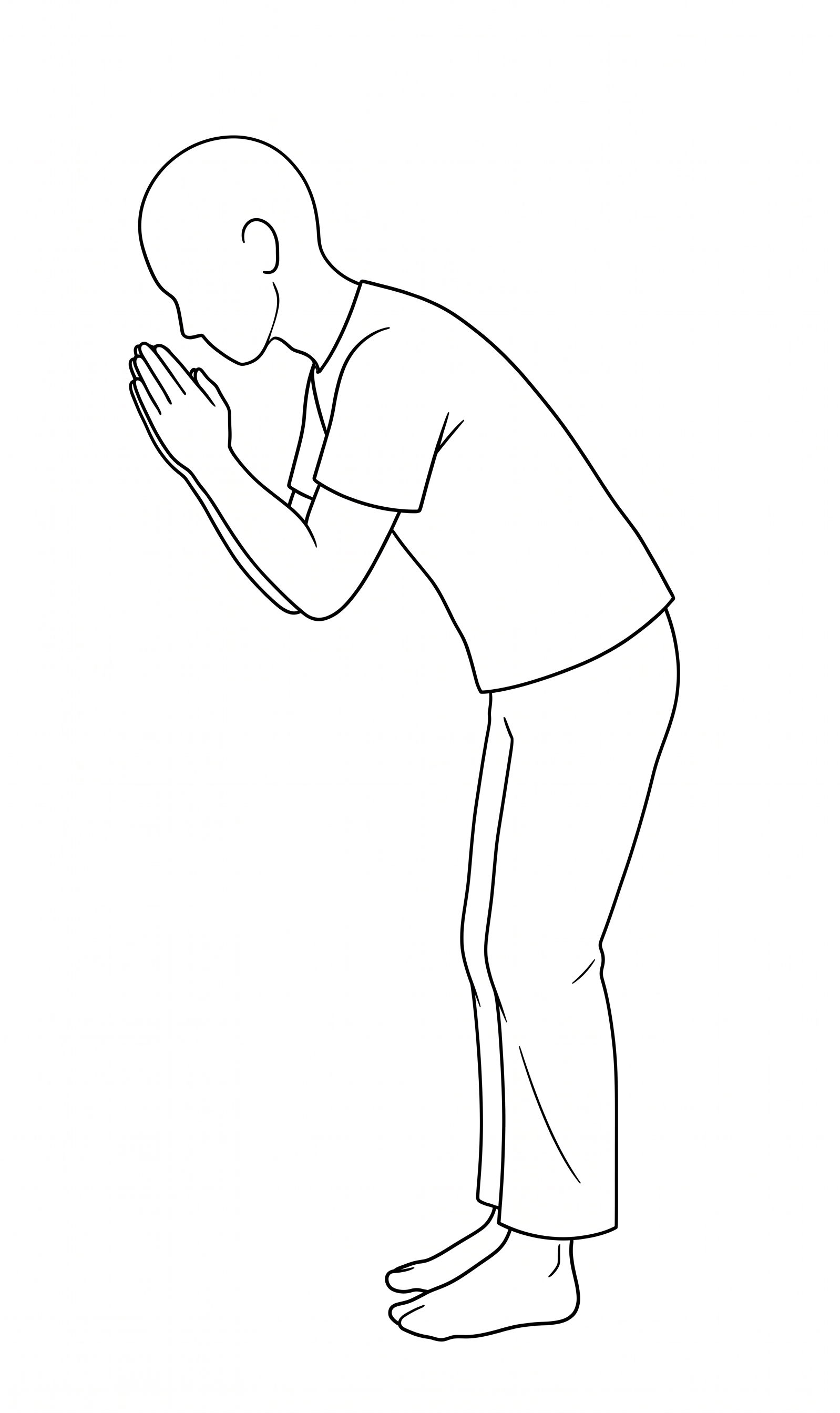
We bow with palms together, hands in front of the mouth, bending at a 45-degree angle. This is called gassho. A bow is not worship — it's an expression of respect and presence. We bow when entering the zendo, when sitting down, and to each other. If bowing is unfamiliar or uncomfortable, a simple nod is fine. Over time, most people find that bowing becomes natural and meaningful. Here are some commmon moments when we bow in gassho:
Enter the zendo (not as you leave)
Sit down (arrange your cushion, bow to it, bow in the opposite direction; sit, turn toward the wall)
As a person next to you bows and sits (only before the first sitting)
In the Zendo
We preserve silence in the zendo. If you need instructions or help that requires talking, please signal the monitor and step outside. Do not enter or leave the zendo during a sitting period. If you arrive late, use the back door and take a seat in the side room, then enter at the break between periods.
Questions
After zazen and service is a good time to ask teachers or senior students about forms. As you have about Zen or Buddhism, as well as issues related to practice and everyday life, you may also request a meeting for practice discussion with a senior teacher or tea with a Zen mentor at any time.