
WELCOME
About Appamada
Bringing the Buddha's teachings to modern life.
Our approach
Waking up and growing up together
Zen isn’t about escaping your life or reaching some special state. It’s about being present to what’s actually happening, with clarity and care. We see three sides to that practice, and each one needs the others.
Waking up
In zazen we sit still long enough to see through the stories we tell about who we are. Something opens, and the boundary between self and world softens.
Growing up
The slower, humbler work of becoming a whole person: meeting our emotions honestly, repairing relationships, and acting from love rather than fear.
Practicing together
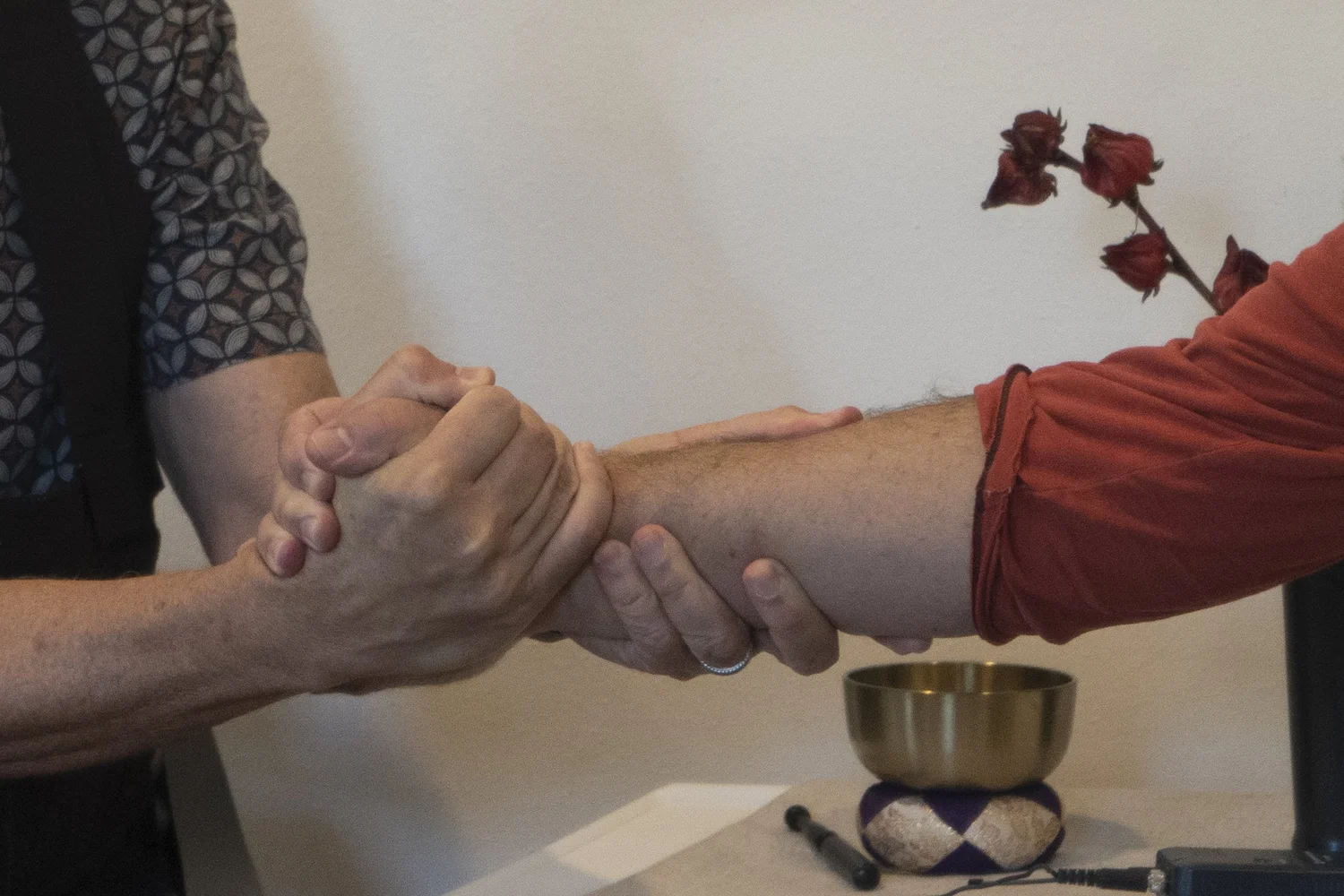
Awakening happens through genuine encounter. Ours is a relational Zen practice. We sit, study, and explore the mystery together.
Our roots
Two teachers who brought Zen into ordinary life
Our practice comes to us through two streams of American Zen. Both teachers insisted that practice is not separate from your actual life: your relationships, your body, your history, your losses.

Shunryu Suzuki Roshi
1904–1971
A Japanese Soto Zen priest who came to San Francisco in 1959 and founded San Francisco Zen Center and Tassajara, the first Zen training monastery outside Asia. His talks, gathered in Zen Mind, Beginner’s Mind, invite us to meet each moment fresh. Appamada’s two founding teachers trained at Austin Zen Center in his lineage.

Charlotte Joko Beck
1917–2011
A pianist, mother of four, and university secretary who began Zen in her forties. She founded Zen Center San Diego and taught, in Everyday Zen and Nothing Special, that ordinary life, especially its difficulties, is the practice itself. Appamada’s founding teacher, Peg Syverson, studied with her for two decades.
Alongside Zen and the wider Buddhist tradition, our teaching draws on psychology, interpersonal neurobiology, the arts, and philosophy. Meet our teachers →
Our story
From a Sunday sitting group to a home for practice
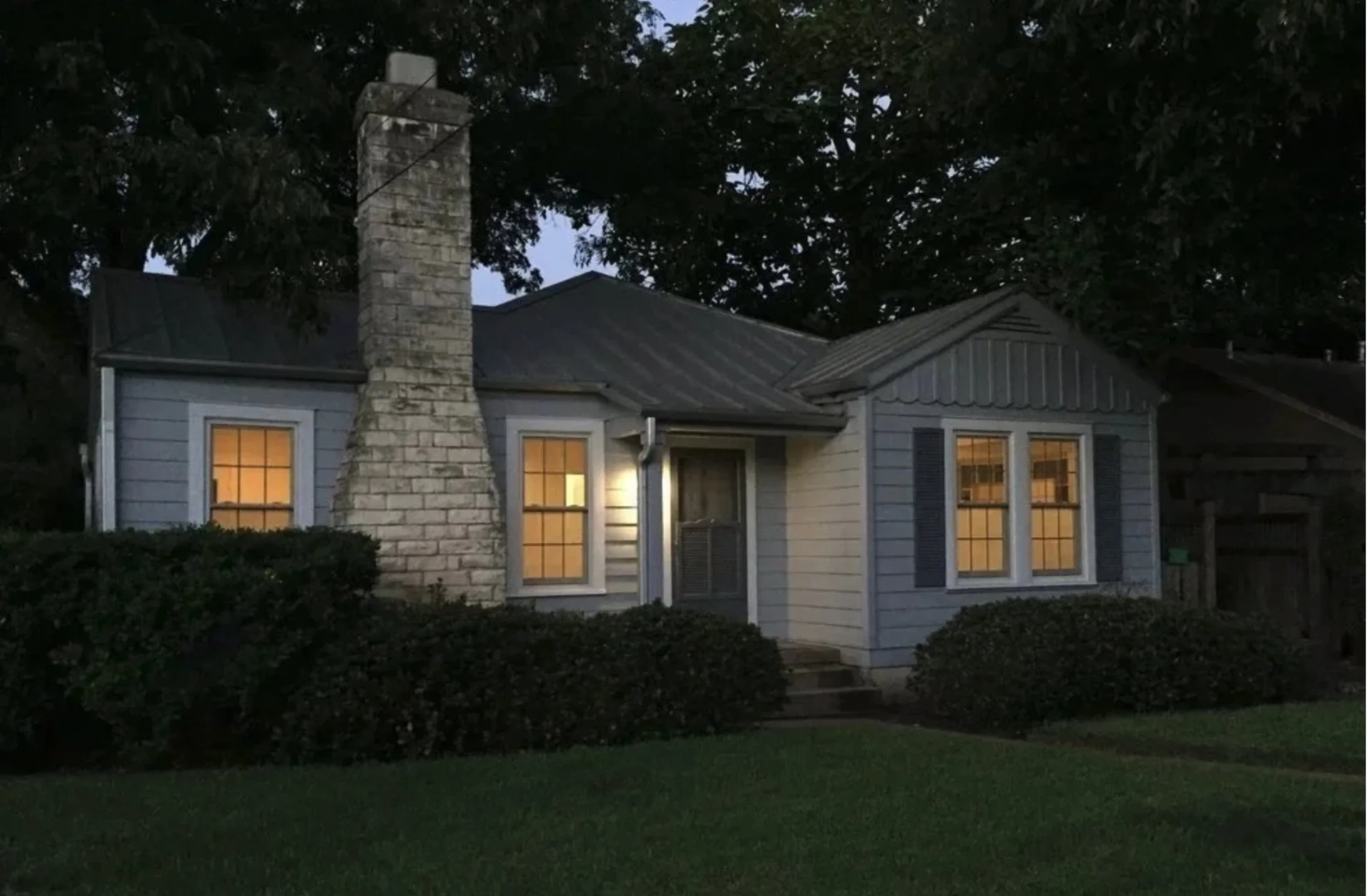
Appamada at dusk, East 38th Street, Austin.
- 1995
A small group begins sitting together on Sunday mornings.
- 2005
The sangha begins gathering at co‑founder Peg Syverson’s home on 38th Street.
- 2009
After fourteen years together, we take the name Appamada.
- Today
Daily meditation, weekly talks, Intensives, and classes, onsite in Austin and online everywhere.
Not Two: The Appamada Story
The full story of how this community came to be, and what it has learned about practicing together, is told in our book.
Our name
appamāda
The Buddha’s last word, offered to those gathered around him as he was dying: fare forward with care.
Translators have struggled with it for centuries: heedfulness, diligence, vigilance. Stephen Batchelor renders it simply as care. Not a passing state of mind, but an orientation: a commitment to being fully present and engaged with what is good. It is at once a watchfulness and a warmth.
Read more
The Buddha compared appamāda to an elephant’s footprint, so large it can contain the footprints of every other animal. In the same way, he said, care contains all of his other teachings.
We chose the name in 2009. It reflects our aspiration as teachers and our sense of the community as a whole: people committed to showing up with clarity, energy, and genuine care for one another and for the world.

New to Appamada?
Come to Sunday orientation or any morning sit. No experience needed.
Visit and get in touch
Questions? We’re glad to hear from you.
Whether you’re wondering about a first visit, a program, or your own practice, send us a note. We’ll be in touch.
Visit us
913 East 38th Street, Austin, TX 78705
Get directions →
We sit together onsite and on Zoom. Anything marked “Zoom” on our calendar is open to you from anywhere.
Call or write