
WELCOME
About Appamada
Our focus is on bringing the wisdom and compassion of the Buddha's teachings to contemporary daily life.
Waking up and growing up
Zen is a tradition of Buddhist practice centered on zazen, or silent, still meditation. It's not about escaping your life or achieving some special state. It's about being present to what's actually happening, right now, with clarity and care.
But what does it actually mean to practice? We point to two distinct and equally necessary dimensions of the path: waking up and growing up.
Waking up is what we usually think of when we imagine enlightenment — the recognition that the self we've been so anxiously defending is not quite what we thought it was. In zazen, we sit still long enough to see through the habitual stories we tell about who we are. Something opens. The boundary between self and world softens. This is the traditional territory of Zen.
But waking up alone is not enough. Growing up is the slower, more humbling work of becoming a full human being — learning to inhabit our emotional lives with honesty, to repair relationships, to recognize the ways our unexamined conditioning keeps us acting from fear rather than love. A person can have genuine moments of awakening and still be controlling, avoidant, or unkind.
At Appamada, we hold both. We follow the lineage of Shunryu Suzuki and Joko Beck, both of whom insisted that practice is not separate from your actual life — your relationships, your body, your history, your losses. This is why our teaching draws on the Zen tradition, broader Buddhist teachings, and contemporary work in psychology, interpersonal neurobiology, the arts, and philosophy. Waking up and growing up need each other — and together, they point toward something whole.
Relational Zen
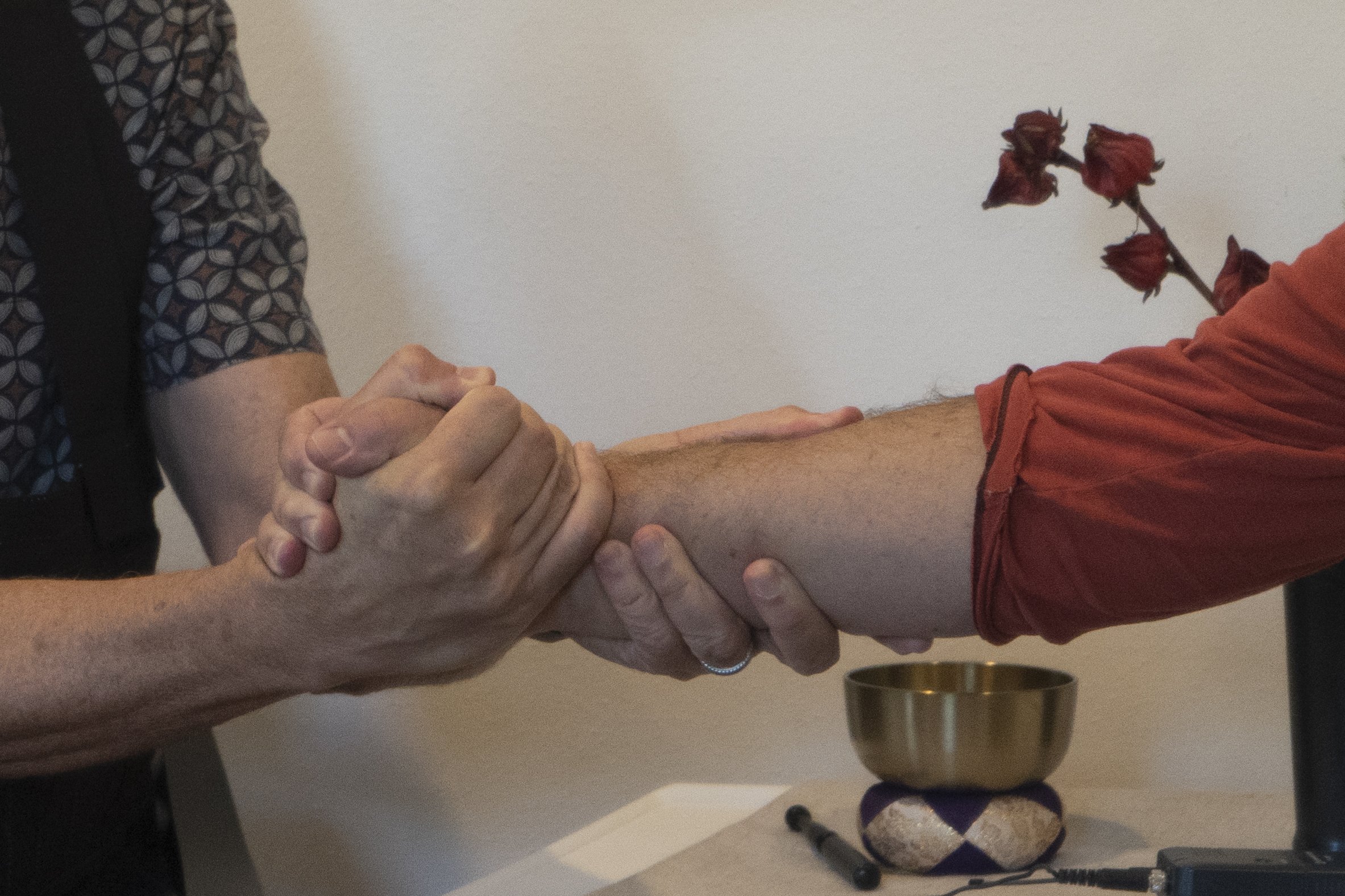
At Appamada, we teach Zen practice as relationality. We are in intimate relationship with ourselves, with other beings, with everything we experience, in this very moment. The Zen tradition has always known that awakening happens most often not in solitude, but in the moment of genuine meeting — in the kitchen, on the road, in a brief exchange that opens something that had been closed.
Zazen prepares us for that meeting. It clarifies our attention so that when we encounter another person — really encounter them — we are available. This is why we practice together, not just alongside each other. We sit together, we study together, we ask hard questions together. The community itself is a form of practice.
This is what we mean by our name. Appamada — mindful, energetic care — is not something you do alone. It is fundamentally relational. It cannot be practiced in isolation. It establishes connections that are conduits for energy, imagination, and attention.
A contemporary Zen center
Appamada’s focus is on bringing the wisdom and compassion of the Buddha's teachings to contemporary lives, through silent meditation, study, inquiry, and relational practices. What began as a small sitting group in 1995 has grown into a center where people come together every day — to sit, to study, to inquire, and to practice being present with one another. .We offer daily meditation, weekly dharma talks, intensives, classes, and a variety of other programs.
Our practice follows the tradition of the American Zen teachers Joko Beck and Shunryu Suzuki. In our teaching we draw on the Zen teachings and tradition, as well as other Buddhist teachings and contemporary work in psychology, interpersonal neurobiology, language, the sciences of complexity and ecosystems, the arts, community, and philosophy.
Our name
Our name comes from the Pali word appamāda. It was the Buddha's last word — his final instruction to those gathered around him as he was dying. Fare forward with care.
Translators have struggled with it for centuries. Heedfulness, diligence, vigilance — none quite captures it. Stephen Batchelor translates it simply as care: not a single state of mind, but an orientation, a commitment to being fully present and fully engaged with what is good. The Indian philosopher Asanga described it as 'energetically cherishing the good and guarding the mind against what gives rise to affliction.' It is at once a watchfulness and a warmth.
The Buddha compared appamāda to an elephant's footprint — so large it can contain the footprints of all other animals. In the same way, he said, care contains all of his other teachings. It holds the whole thing together.
We chose this name in 2009, after fourteen years of practicing together. It reflects not only our aspiration as teachers, but our sense of the community as a whole — a community committed to showing up with clarity, energy, and genuine care for one another and for the world.
Find us
We are located at 913 East 38th St., Austin, TX 78705

GET DIRECTIONS→
We sit together onsite and online via Zoom. All programs marked "Zoom" on our calendar are accessible from anywhere.